
The order, a "negative" overall, will be a short term positive for corporate focused state-run and private lenders because of the possibility of delaying incremental stressed asset recognition.
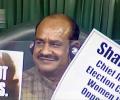
The Opposition intensified its noisy protests in Lok Sabha on Wednesday over Pegasus snooping, farm laws and other issues with some unruly members even hurling papers and torn placards in the House, but the government went ahead with its legislative agenda and three bills were passed amid the din.
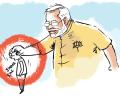
'By not only decriminalising routine business failures, but by ensuring that institutional lending and corporate rescue frameworks are strengthened via the IBC, the prime minister has ensured there is no room anymore for the proverbial 'reckless, prodigal debtor',' notes Sanju Verma.
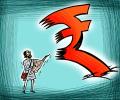
The origin of the challenge is the so-called "fresh start" process. Many in the MFI industry apprehend that such a law in India will encourage small unsecured borrowers to default and destroy the credit culture. So, while'Fresh start' is a welcome step as it will free up the debtors from the archaic laws of the colonial era, debtors need handholding and counselling to prevent any misuse, says Tamal Bandyopadhyay.

The fundamental debate remains where you stand on the long-term growth question. That is what every investor must monitor and come to their own conclusions, suggests Akash Prakash.

In big bang reforms, the Union Cabinet on Wednesday approved a relief package for the telecom sector that includes a four-year moratorium on payment of statutory dues by telecom companies as well as allowing 100 per cent foreign investment through the automatic route. Briefing reporters on the decisions taken by the Cabinet, Telecom Minister Ashwini Vaishnav said nine structural reforms for the telecom sector were approved. The definition of AGR, which had been a major reason for the stress in the sector, has been rationalised by excluding non-telecom revenue of telecom companies.

People like Manmohan Singh and P Chidambaram, who as finance minister had fully supported the NPS, refuse to exercise their moral and political influence to try and stop Ashok Gehlot and others hell-bent on wrecking the states' finances, notes Virendra Kapoor.

The latest move, even if it is symbolic, is the first rate hike after the one announced end of 2019.

The World Bank on Sunday said the coronavirus outbreak has severely disrupted the Indian economy, magnifying the pre-existing risks to its outlook. In its 'South Asia Economic Update: Impact of Covid-19', the World Bank estimated the Indian economy to decelerate to 5 per cent in 2020 and projected a sharp growth deceleration in fiscal 2021 to 2.8 per cent in a baseline scenario.

Reliance Capital has two credit verticals -- Reliance Commercial Finance and Reliance Home Finance -- with a cumulative asset of over Rs 25,000 crore.
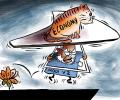
There is talk of a fresh approach to a new labour code as well as reforming land acquisition laws in such a way as to be politically.

From near bankruptcy late last year, banking behemoth Citigroup on Friday posted swung into profit of $4.28 billion for the second quarter riding on stake sale in group company Smith Barney brokerage.

Rogue lending under political influence was rife in the Congress-led regime and is not happening in the Modi regime, certainly not on that scale. But if PSBs cannot lend as indiscriminately as they did last time in the name of 'credit expansion', how well will these banks do, asks Debashis Basu.

India's goal of self-reliance has been paramount in the policy and practice of the country. The COVID-19 crisis gave us lessons on how to speed up efforts in that direction, he said.

'The recent price hike would only be beneficial if the airlines continue to operate at 80 per cent airline capacity. An increase towards 90 or 100 per cent airline capacity would again add pressure to the fares as demand remains muted. Also, we are in the fourth quarter of the fiscal year which is a seasonally weaker quarter,' says an analyst.
Lenders can now review a borrower account within 30 days of default. Earlier, the banks had to start resolution within one day of default.

He stressed that there was no need to bring the legislation as it was "anti-democratic" and "divided people on the basis of religion". "There is a constitutional crisis. You cannot ignore state governments. You have to take them into confidence," Sinha said when asked about resolutions passed by states against the Citizenship Amendment Act.

Home buyers would be able to invoke Section 7 of the IBC against errant developers.

A third of the total restaurant market in India - valued at Rs 4.25 trillion - could be wiped out in the current financial year, since many players have simply been unable to sustain operations in the absence of customers.

While players in the financial ecosystem are opening up to the idea of receivables funding for the sector, this market needs a regulator, which a Parliament panel feels only RBI can provide.

India Ratings expects long products demand growth to be sharp, supported by a demand push from the government-led infrastructure investments in affordable housing, railways, rural electrification and road networks.

'Tinkering will not do. Merely staggering spectrum dues comes nowhere near solving the problem,' cautions Rahul Khullar.

Sources said much has been done to ease the tax burden of the middle classes in the last five years, and that such a measure affects only a limited segment of people when the focus should be to put money in rural areas. Archis Mohan reports.

A combination of demonetisation, a poorly and hurriedly implemented GST, and more recently the "botched up" lockdown of the economy to control the spread of Covid has brought the economy to its knees.

'One of the ways to do that is to ensure that NBFCs have got liquidity.' 'If we don't do that, this mood of gloom will continue.' NBFCs need to be provided with liquidity if they have to start lending.

Listening -- really listening -- to advisers in the government and outside would help. India has plenty of wise economists who have worked within the bureaucracy during previous crises, points out Rahul Jacob.

Siva group defaulted on payment in 2016 and is also facing CBI investigation

The prime minister has been unstoppable as he transported the BJP to colossal success on a wave of muscular nationalism, majoritarian pride and charisma.

'India is in a slowdown which most of us have not seen in our living memory.'

A pact between the NPCIL and Westinghouse to build six power reactors in Andhra Pradesh is unlikely to be signed.
Following several instances of poor drafting of Cabinet notes and bills in the recent past, on September 11, the Cabinet Secretariat wrote to all ministries and departments to read up paragraph 55 of the 'Handbook of Writing Cabinet Notes'. Archis Mohan reports.

'Given the emerging trends, it may be time for India to embrace digital banking,' notes Pradipta Bagchi.

'I would like to convey the message to your readers that the prime minister himself is directly seized of the situation on the ground. He periodically reviews the situation on the ground and how it is moving forward, taking inputs from economists, business leaders, chambers of commerce.'

The Modi government could steer through Parliament 59 out of 75 Bills.


Budget 2016 may hold some answers to start-up cooncerns.

'Rate cut should reiterate RBI's commitment in providing confidence to consumers and small business.'

'On the evening of the 17th, the RBI said the bank was put on moratorium.' 'Within an hour, the RBI said it would be merged with DBS.' 'How did DBS come to know within an hour that LVB was in trouble?' 'It means, what happened was match-fixing.'

The failure to reform has meant that there is no buzz about job opportunities, or about urban opportunities enticing young people off the farms. And it is this failure that has contributed to the widespread disappointment that threatens to make the next general elections closer than expected, says Mihir S Sharma.

There are also signs that the private sector investment cycle is slowly coming back, as capacity utilisation figures across industry continue to slowly creep up. A pickup in investments will front load profitability, says Akash Prakash.
